Property owners requiring pest control services in Frisco encounter unique structural vulnerabilities created by North Texas expansive clay soil and slab foundation brick weep holes. CopperNest Pest Defense establishes clinical barrier treatments that stop pests before they penetrate the thermal envelope of suburban residences.

Pest control services in Frisco is a specialized structural protection protocol designed to eliminate active insect populations and prevent seasonal pest breaches across Collin County residential foundations.
Every service reflects the same meticulous attention to detail, whether it's a single job or a larger pest control services project across Frisco.
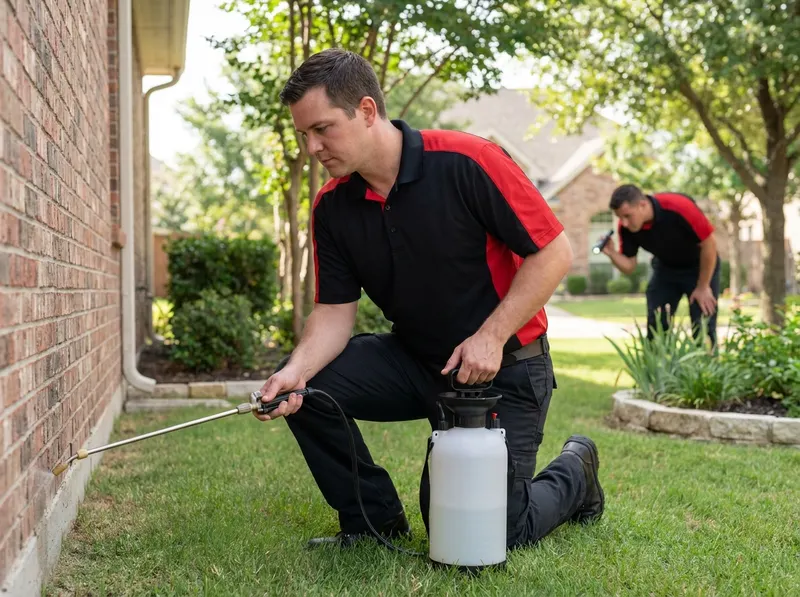
A systematic exterior application establishing a resilient micro-barrier around residential foundations. Technicians treat a 3-foot vertical band of brick or stone veneer and a 6-foot horizontal strip of soil or turf, neutralizing crawling vectors like striped bark scorpions, field crickets, and Turkestan cockroaches before entry. Service visits recur every 90 days to maintain active residual defense against intense summer degradation, accounting for the photo-breakdown of pyrethroids exposed to extreme Texas ultraviolet sunlight. In addition to foundation spraying, technicians sweep exterior eaves, soffits, and window frames up to a height of 20 feet to remove spider webbing and paper wasp nests, preventing aerial recolonization near outdoor living spaces and second-story dormers.
Get a quote →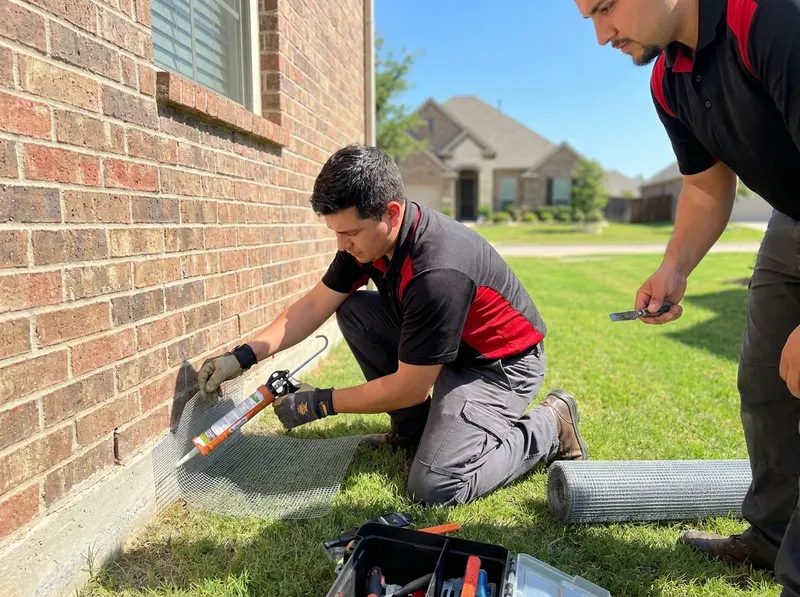
A mechanical barrier installation sealing brick weep holes and exterior siding transitions using corrosion-resistant woven copper mesh or specialized weep baffles. This protective process allows slab-foundation airflow and cavity drainage while physically halting subterranean termites, crickets, and mice from penetrating interior wall voids. Treatments include sealing mortar fractures, masonry expansion gaps, and plumbing penetrations where air-conditioning copper linesets enter exterior wall envelopes. By addressing openings as small as 1/16th of an inch, technicians create an impenetrable envelope that denies passage to crawling arthropods seeking refuge from soil shifts or saturated landscape beds during seasonal rain events.
Get a quote →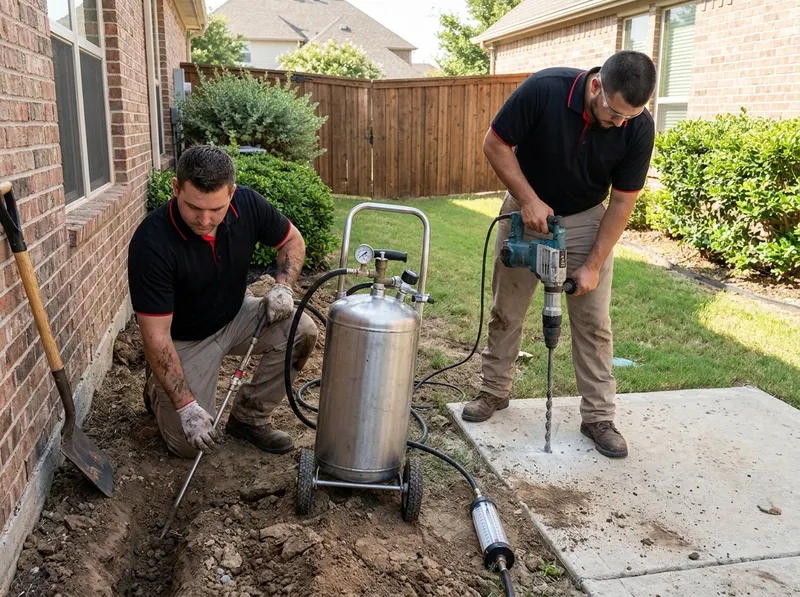
A comprehensive barrier program targeting Reticulitermes flavipes in North Texas clay soil. Technicians excavate continuous trenches along exterior foundation edges, apply non-repellent liquid termiticides, and install low-profile exterior bait stations every 10 to 15 feet. This approach establishes a complete treatment zone shielding load-bearing sill plates and interior wall studs without disrupting surrounding decorative stonework. Technicians utilize calibrated flow meters to deposit termiticide at exact label rates of 4 gallons per 10 linear feet per foot of depth, saturating the subterranean root zone where worker termites build exploratory mud tubes between foundation fissures and framing members.
Get a quote →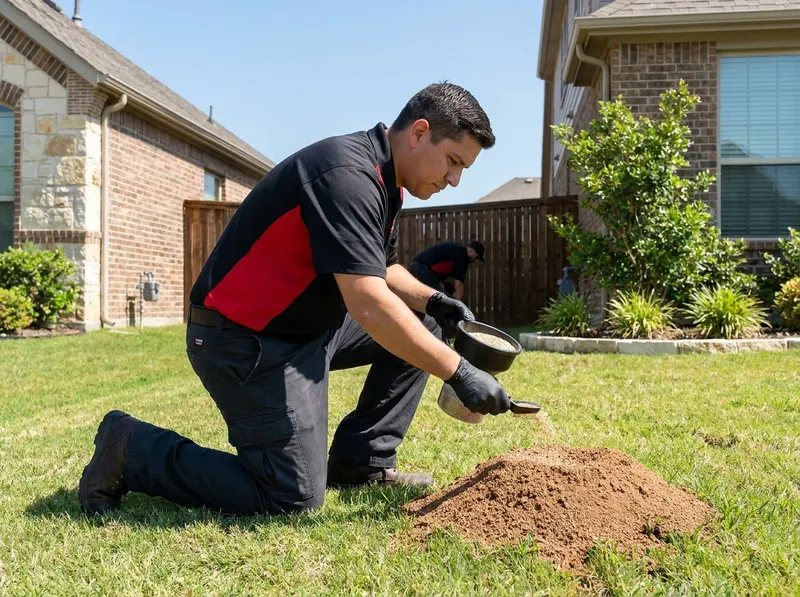
An architectural yard-treatment protocol neutralizing red imported fire ant mounds (Solenopsis invicta) across turf and landscape beds. By integrating granular insect growth regulators with precision mound drenching, this system stops queens from reproducing and eliminates sting hazards around family play yards, swimming pools, and patios. The protocol establishes season-long systemic control across Bermuda, St. Augustine, and Zoysia turfgrass by deploying bait matrices that worker ants forage and transport deep into subterranean chambers, sterilizing the colony's reproductive caste within 3 to 6 weeks while simultaneously eradicating active surface mounds within 24 hours of contact application.
Get a quote →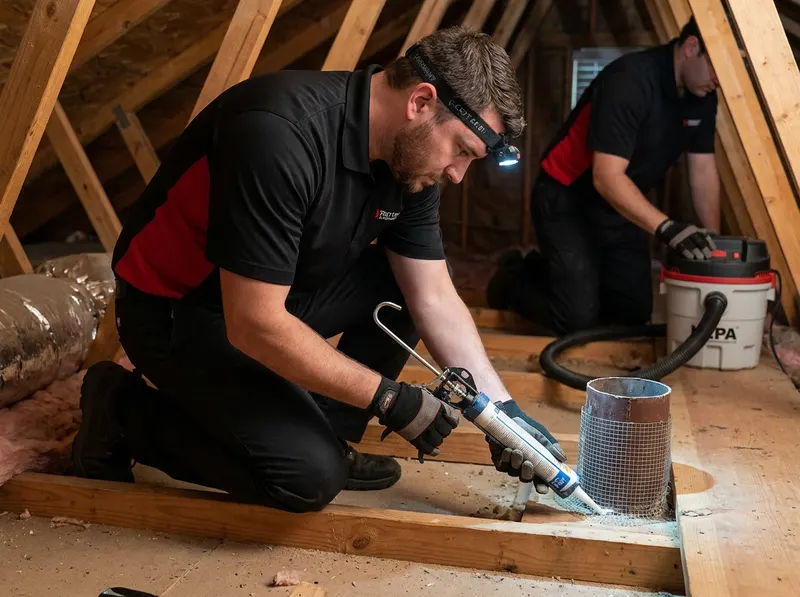
A permanent mechanical proofing service preventing roof rats and house mice from harvesting attic insulation for nesting material. Crews install heavy-gauge 1/4-inch galvanized hardware cloth over attic gable vents, soffit returns, and roof-line freeze boards, followed by the complete sanitization of localized rodent droppings and pheromone trails. Technicians utilize dual-stage HEPA filtration vacuums to clear biological matter without circulating particulate pathogens, followed by electrostatic misting of an EPA-registered hospital-grade antimicrobial agent that neutralizes leptospirosis, hantavirus, and persistent territorial odor markers within cellulose and fiberglass insulation blankets.
Get a quote →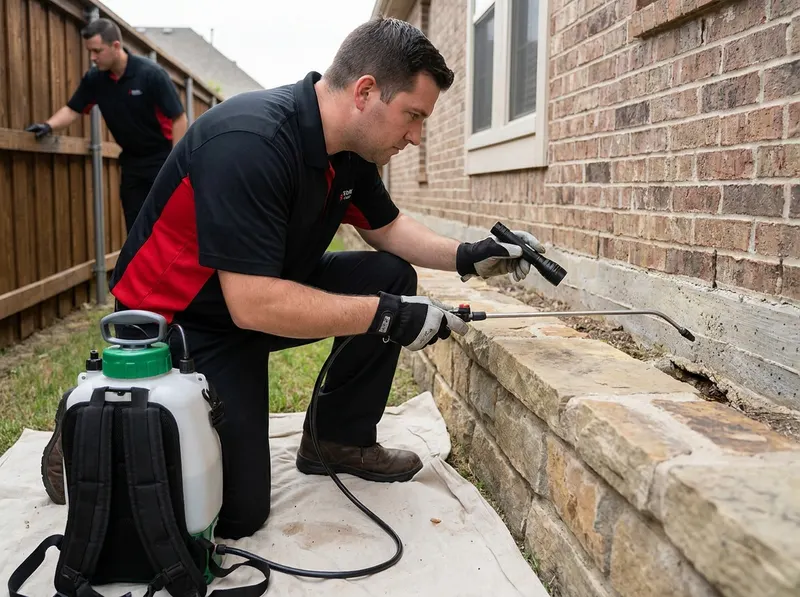
A specialized application focused on micro-habitats favored by Centruroides vittatus. Technicians micro-dust wall voids, treat perimeter rock retaining walls, and create a broad repellent barrier along foundation edges. Nighttime ultraviolet diagnostic surveys locate hidden harborage sites around landscape rock, patio stones, and exterior expansion joints. Because scorpions possess thick cuticles that resist conventional microencapsulated surface sprays, our targeted approach utilizes wettable powders and micro-crystalline formulations that adhere directly to the pest's walking legs and sternal plates, transferring the active lethal ingredient as they groom themselves inside dark masonry fissures.
Get a quote →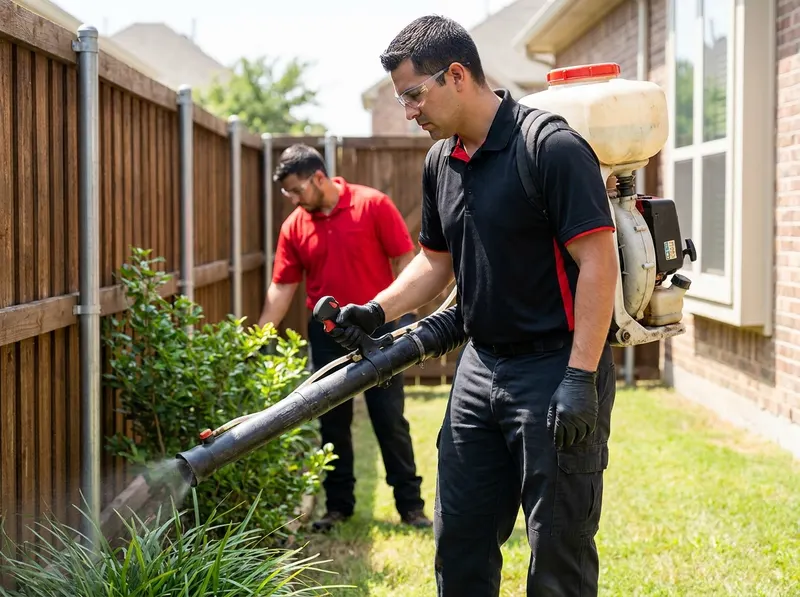
A targeted seasonal foliage barrier targeting Aedes and Culex mosquito species during peak breeding months from April through October. Using high-efficiency mist-blowers, technicians apply botanical-derived residues to the underside of ornamental shrubs, dense ground covers, and shaded porch eaves, interrupting the adult reproduction cycle. Treatments include inspecting French drains, gutter downspouts, and birdbaths to apply biological larvicides containing Bacillus thuringiensis israelensis, preventing aquatic larvae from emerging into biting adults without posing risks to non-target pollinators or beneficial garden predators.
Get a quote →
An intensive multi-stage protocol clearing persistent Blattella germanica infestations inside kitchens and utility rooms. The process deploys insect growth regulators, precision bait matrices in cabinet hinges, and void vacuuming using HEPA equipment to remove egg cases without leaving persistent airborne odors or oily chemical residues. Technicians pinpoint harborage zones behind commercial-grade kitchen ranges, under motorized refrigerator compressors, and inside hollow electrical conduits, establishing high-attractant feeding points while introducing juvenile hormone mimics that prevent nymphal molting and reproductive maturation.
Get a quote →You get a firm, itemized quote for your pest control services before any work begins, no surprises, no pressure.
Careful prep, tidy work, and a full cleanup when we are done. We treat your home and belongings like our own.
The same trusted, background-checked team from the first call to the final check.
Selecting appropriate residential structural defense depends on the severity of pest activity, building architecture, and seasonal pressure. If recurring ants, spiders, or crickets are trespassing through perimeter turf, choose a quarterly exterior barrier program that establishes active residual defense without requiring interior chemical spraying. If active subterranean termites or wood-destroying beetles threaten internal framing, choose an intensive structural soil injection treatment combined with ongoing bait stations; the operational trade-off involves higher upfront mitigation costs versus preventative long-term asset conservation.
For homeowners facing persistent attic noises or kitchen pantry breaches from roof rats or house mice, mechanical rodent exclusion provides permanent physical sealing, whereas chemical baiting alone only mitigates current populations without blocking future access through unsealed rooflines. When addressing expansive lawn infestations such as red imported fire ants across acre-sized lots, broadcast insect growth regulators offer whole-yard population suppression over several months, whereas topical mound drenches deliver immediate localized kill on active mounds near high-traffic patios and play structures; the functional trade-off balances slow systemic colony breakdown against immediate spot eradication. In properties where brick veneer masonry meets grading soil without physical clearance, installing woven metallic weep baffles prevents crawling pests and small vertebrates from entering interstitial wall cavities while preserving masonry weep drainage, representing a permanent structural improvement rather than recurring chemical applications.
Every project gets a firm, written price after a free on-site visit. Ranges below for orientation.
Tell us about your pest control services job and we'll send a clear, written quote, usually the same day. Or just call and talk to a real Frisco pro.
(945) 281-1222
Residential properties in Frisco face acute structural vulnerability due to the shrinking and swelling of Blackland Prairie soil along the Eagle Ford geological formation. When North Texas summer temperatures exceed 100 degrees Fahrenheit, dry clay contracts away from concrete slab foundations, opening subterranean fissures up to 3 inches wide. These soil gaps allow subterranean termites, field mice, and scorpions to travel below ground level directly toward moisture-rich foundation perimeters near landmarks like Toyota Stadium and Riders Field, making perimeter defense and weep hole protection essential structural safeguards. Furthermore, residential development across master-planned communities adjacent to the PGA Frisco headquarters and The Star in Frisco has disrupted historic agricultural acreage and natural riparian corridors along Stewart Creek and Panther Creek. Displaced wildlife and arthropod populations naturally gravitate toward residential developments characterized by irrigated lawns, ornamental mulch beds, and decorative stone retaining walls. The typical Frisco residential layout features a post-tension concrete slab with continuous brick or chopped stone veneer. Building codes require open vertical weep holes every 33 to 36 inches along the bottom mortar course to allow condensation and moisture egress from the masonry cavity. However, unmanaged weep holes serve as superhighways for opportunistic insects, permitting direct access to warm wall insulation, electrical wiring cavities, and plumbing chases without triggering traditional surface barrier chemicals applied only to topsoil.
Free estimates for Frisco & the surrounding area.
For standards, safe disposal, and service guidance on pest control services in Frisco, TX, useful references include U.S. EPA, ENERGY STAR, U.S. Dept. of Energy, Consumer.gov, U.S. Census Bureau, and Google Maps. General consumer and small-business resources are available from USA.gov, Better Business Bureau, FTC Consumer Advice, U.S. Small Business Administration, and Ready.gov.
 CopperNest Pest Defense