North Texas architecture presents unique vulnerabilities for suburban properties across Denton County and Collin County. Two-story brick-and-stone homes in master-planned neighborhoods like Newman Village, Stonebriar,…
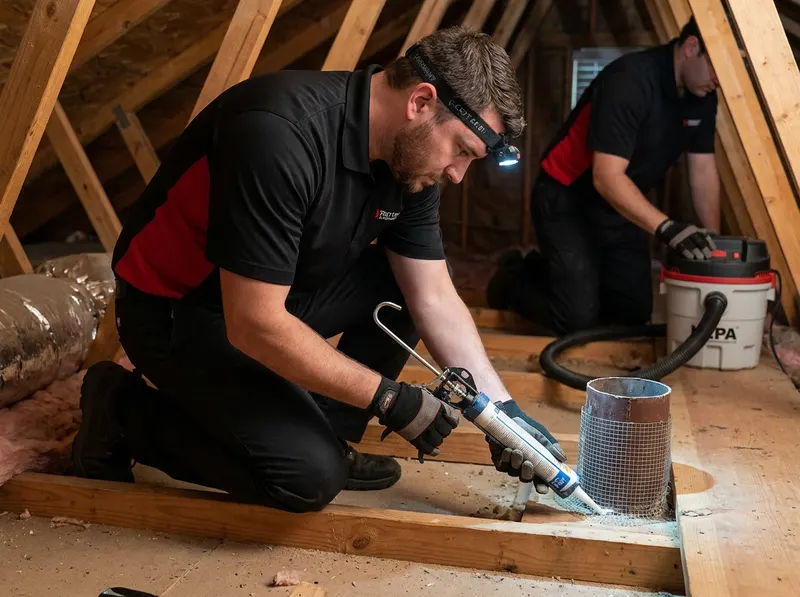
North Texas architecture presents unique vulnerabilities for suburban properties across Denton County and Collin County. Two-story brick-and-stone homes in master-planned neighborhoods like Newman Village, Stonebriar, and Phillips Creek Ranch feature complex roof geometries, soffit returns, and decorative stone ledges that serve as elevated highways for roof rats (Rattus rattus). Rodents exploit 0.5-inch gaps along ridge vents, plumbing pipe jacks, and fascia intersections to enter attic envelopes. Once inside, they compress blown fiberglass insulation, chew electrical wiring jacketed in thermoplastic, and leave urine trails that carry zoonotic pathogens. CopperNest Pest Defense treats this threat as an engineering failure requiring architectural remediation rather than superficial poisoning. Rodenticides placed in attics cause secondary hazards, including decaying carcasses within wall cavities and secondary toxicity risks for domestic pets, as documented by the US Environmental Protection Agency.
Structural exclusion establishes an impassable physical perimeter. Technicians install 16-gauge galvanized steel hardware cloth across gable vents and seal dormer gaps with copper mesh and elastomeric sealants meeting ASTM International building performance standards. The trade-off between standalone trapping and mechanical exclusion is longevity: mechanical exclusion permanently seals the envelope to prevent re-entry, whereas standalone trapping only reduces the current population until new rodents discover the open scent trails. Weep hole vents along the ground slab, common in Shaddock Creek Estates, Starwood, and Richwoods, receive stainless steel inserts conforming to guidance from the Texas A&M AgriLife Extension Service, preventing mice from ascending interior drywall voids. Technicians handle all pest management protocols strictly within commercial applicator parameters established by the Texas Department of Agriculture structural pest control service regulations.
Decontamination neutralizes the respiratory and physical contamination left in the thermal boundary. When biohazard loads exceed localized spot-treatments, technicians deploy negative-air HEPA systems certified under NIOSH air-filtration protocols to safely extract contaminated cellulose without dispersing particulate matter into downstream HVAC returns. Soiled surfaces undergo treatment with broad-spectrum virucidal agents registered by the Centers for Disease Control and Prevention to neutralize hantavirus, leptospirosis, and salmonella antigens. Insulation replacement restores the attic's thermal resistance to the recommended R-38 level outlined by the U.S. Department of Energy, stabilizing interior temperatures during triple-digit North Texas summer heat. All biological materials are containerized according to municipal handling frameworks coordinated through the Texas Commission on Environmental Quality and Frisco environmental waste guidelines.
Every job gets a firm, written price after a free on-site visit.
For standards, safe disposal, and service guidance on pest control services in Frisco, TX, useful references include U.S. EPA, ENERGY STAR, U.S. Dept. of Energy, Consumer.gov, U.S. Census Bureau, and Google Maps. General consumer and small-business resources are available from USA.gov, Better Business Bureau, FTC Consumer Advice, U.S. Small Business Administration, and Ready.gov.
Tell us about your attic rodent exclusion & decontamination job in Frisco and we'll send a clear, written quote, usually the same day.
 CopperNest Pest Defense